
Blog

How to Prepare for Your Event Videography Session
Preparing for your event videography session is like orchestrating a symphony of details that could make or break your masterpiece. First, you need to pinpoint your videography goals with laser precision, ensuring they align with what captivates your audience. Choose a videographer whose style mirrors your creative vision, and synchronize your plans down to the minute. But mastering the venue’s quirks and lighting conditions is where the real magic begins. What’s the next vital step?
TL;DR – (Too Long; Didn’t Read)
- Define clear videography goals and identify key moments to capture.
- Choose a videographer whose style aligns with your event’s theme and vision.
- Analyze the venue layout to determine optimal camera angles and lighting conditions.
- Coordinate with vendors to ensure seamless scheduling and event flow.
- Create a detailed schedule, allocating time for setup, recording, and teardown.
Determine Your Videography Goals
Why is it essential to determine your videography goals before an event? By defining clear videography objectives, you sharpen your focus, guaranteeing every shot aligns with your vision.
Start by pinpointing what you want to achieve with your video. Are you capturing the essence of a corporate seminar or the vibrant energy of a music festival?
Understanding your target audience is equally critical. Who’ll watch your video, and what message should resonate with them? This insight guides your creative decisions, from shot composition to editing style.
For example, professional Regina wedding videography services, like those offered by Rhinos Lighting & Sound, emphasize capturing both big moments and small details, ensuring that the final video is a seamless, cinematic compilation that reflects each unique love story.
Choose the Right Videographer
Selecting the right videographer is essential to the success of your event’s visual storytelling. You’ll need a professional who aligns with your vision and budget considerations.
Consider these factors to ascertain you make an informed choice:
- Portfolio Review: Examine their previous work to identify if their videographer styles resonate with your event’s theme.
- Technical Skills: Verify they’re equipped with the necessary skills and innovative tools to capture your event flawlessly.
- Budget Alignment: Confirm their pricing fits within your financial plan without compromising on quality.
- Client Testimonials: Seek feedback from past clients to gauge reliability and creativity.
- Availability: Check their schedule to validate they’re available for your event date.
Additionally, it’s important to confirm that the videographer offers full reproduction rights to ensure you can use your images and videos freely without watermarks.
Discuss Your Vision and Style
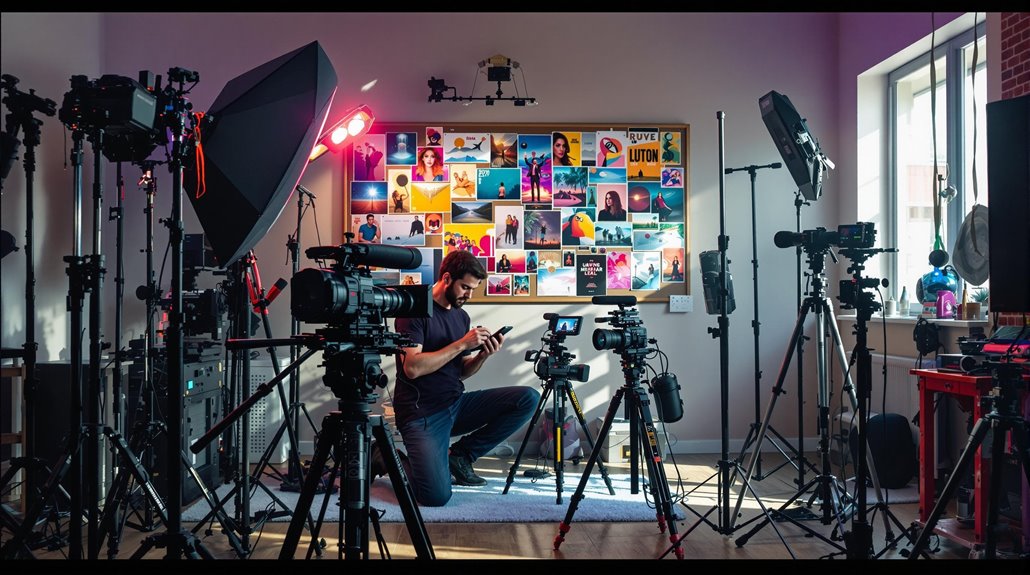
How exactly do you guarantee your videographer captures the essence of your event? Start by discussing your vision and style with them. Clearly articulate your creative concepts, making certain they understand the mood and theme you envision. Explore specifics—consider color schemes, lighting preferences, and any symbolic elements you wish to highlight. This foundation is vital for crafting a compelling narrative through visual storytelling. Encourage your videographer to think innovatively, marrying your ideas with their unique expertise. Request examples of past work that align with your vision to confirm compatibility. Discuss potential visual motifs or recurring themes that can thread through the footage, enhancing the story’s cohesion. By collaboratively shaping these elements, you guarantee a final product that resonates and captivates your audience. Consider the option of having dual photographers & videographers to ensure multi-angle coverage and detailed, artistic recordings.
Understand Your Venue
When you’re preparing for event videography, understanding your venue is essential. Immerse yourself in the venue layout with a technical eye, scouting for unique angles and ideal camera positions. Conduct an acoustics assessment to identify potential audio challenges.
Here’s how to innovate your approach:
- Analyze the floor plan: Identify power sources and potential obstructions.
- Test lighting conditions: Consider natural light and existing fixtures.
- Evaluate sound dynamics: Check for echoes or interference from ambient noise.
- Explore vantage points: Decide on high or low angles for dynamic shots.
- Identify key areas: Locate spots of high activity for capturing pivotal moments.
Additionally, consider using professional-grade equipment like mixers and soundboards to enhance your videography and ensure high-quality audio capture.
Create a Detailed Schedule
A well-crafted schedule is the backbone of successful event videography. Start by mapping out the event’s timeline, guaranteeing every moment is accounted for. Employ precise time management, allocating specific slots for setup, recording, and teardown. This guarantees you’re not scrambling at the last minute. Consider leveraging digital tools or apps to streamline this process, making adjustments on the fly when necessary. Additionally, capturing candid moments is essential to reflect the genuine atmosphere of the event. Next, embrace efficient task delegation. Assign roles such as equipment setup, lighting adjustments, and audio checks to team members based on their strengths. This not only boosts productivity but also fosters a collaborative environment.
Prepare a Shot List
Crafting a detailed shot list is essential for capturing the essence of any event. By defining your vision, you guarantee that no key moments are missed and every shot type is meticulously planned.
Defining your vision ensures every key moment is captured and enhances the event’s essence.
Start by identifying the pivotal instances you want to immortalize. Consider using a variety of shot types to provide dynamic visual storytelling. Here’s a guide to get you started:
- Wide shots: Establish the venue’s atmosphere and context.
- Close-ups: Capture emotions and intricate details.
- Medium shots: Highlight interactions between attendees.
- Tracking shots: Follow action and movement seamlessly.
- Cutaways: Add depth by including relevant background details.
Each shot serves a purpose, enhancing the narrative of your event. With a well-prepared shot list, you’ll innovate your videography and guarantee an engaging final product.
Consider Lighting Conditions
While a detailed shot list sets the stage for impactful storytelling, lighting conditions greatly influence the quality of your footage. Harness the power of natural lighting to enhance depth and realism; it’s your most authentic light source.
Scout your venue at the time of the event to understand the sun’s trajectory. For indoor settings or nighttime shoots, strategically employ artificial lighting to maintain consistency and control.
Balance is key: blend natural and artificial lighting to create dynamic visuals that captivate your audience. Experiment with different angles and intensities to avoid harsh shadows or overexposed highlights.
Select Appropriate Equipment
Selecting the right equipment is essential for capturing high-quality event footage that resonates with your audience. Immerse yourself in the world of innovation by selecting gear that aligns with your creative vision and the event’s unique demands.
Here’s a checklist to guide you:
- Camera Types: Consider DSLRs for versatility, mirrorless for speed, or camcorders for simplicity.
- Lenses: Choose wide-angle lenses for dynamic crowd shots and telephoto lenses for intimate details.
- Audio Equipment: Invest in shotgun mics for directional clarity or lapel mics for unobtrusive dialog capture.
- Stabilization Tools: Gimbals guarantee smooth motion, while tripods offer stable long shots.
- Lighting Accessories: LED panels can simulate natural light and add dramatic effects.
Harness these tools to create engaging visuals that push boundaries and engage your viewers.
Coordinate With Other Vendors
Successfully capturing the essence of an event requires seamless coordination with other vendors, as their roles greatly impact your videography.
First, identify key vendor roles, such as the event planner, lighting technician, and sound engineer. Engage in timeline coordination to guarantee each segment of the event flows smoothly and that you’re prepared for pivotal moments.
Use innovative tools like shared digital calendars to synchronize schedules and avoid overlaps or missed opportunities. Establish a central hub for real-time communication, allowing you to adapt swiftly to any changes.
Stay proactive in understanding each vendor’s setup and teardown times, optimizing your shooting plan accordingly. By integrating these elements, you’ll enhance your ability to deliver a fascinating, cohesive event video.
Communicate Expectations Clearly
How effectively are you setting the stage for a successful event video? Clear communication is vital.
Define your vision by aligning with the videographer on specific details. Discuss audience preferences and guarantee your creative ideas are understood. Establish a project timeline to avoid any last-minute surprises.
Here’s how to communicate expectations clearly:
- Specify the desired tone and style: Is it formal, casual, or creative?
- Clarify the key moments to capture: Prioritize essential scenes.
- Share audience preferences: Know what resonates with your audience.
- Discuss technical requirements: Confirm equipment meets your needs.
- Set a precise project timeline: Keep everyone on schedule.
These steps foster innovation and guarantee your videographer delivers a stunning visual story that captivates and engages.
Common Questions
How Can I Make My Event Videos Stand Out From Others?
To make your event videos stand out, focus on creative storytelling. Capture unique angles to add depth and intrigue. Use dynamic compositions and fluid movements, ensuring each shot contributes to a compelling narrative that captivates and engages your audience.
What Are Some Tips for Staying Calm During Filming?
Picture your mind as a calm ocean. Use breathing techniques to steady your nerves. Engage in mental visualization, seeing success unfold before you. You’re the director, orchestrating creativity. Trust your skills, and innovation will naturally follow.
How Do I Handle Unexpected Changes or Disruptions on the Event Day?
When unexpected changes arise, rely on robust backup plans. Communicate swiftly and creatively with your team using effective communication strategies. Embrace innovation by adapting on-the-fly, ensuring your videography session remains seamless and intriguing despite disruptions.
What Should I Wear as the Videographer to Blend in With the Event?
Think of yourself as a chameleon in a digital jungle. Wear professional attire that harmonizes with the event’s theme, ensuring your camera gear doesn’t steal the spotlight. Comfortable shoes and neutral colors help you blend seamlessly.
How Can I Ensure High-Quality Audio Recording in My Videos?
Guarantee high-quality audio by selecting superior audio equipment. Conduct a thorough sound check before the event begins. Innovate by experimenting with microphone placements, and actively monitor levels to adapt and capture pristine sound throughout.
Summary
With your event on the horizon, you’ve laid the groundwork for a seamless videography session. You’ve nailed down your goals, picked the perfect videographer, and synced plans with vendors. You’ve scouted the venue and crafted a detailed timeline, leaving no stone unturned. By considering lighting and equipment, you’re well-prepared to capture every moment. Now, it’s time to let the cameras roll and watch your vision come to life. Remember, the devil’s in the details, but you’ve got this!