
Blog

Top Audio Visual Trends for Events
In 2026, 75% of events are expected to incorporate holographic displays, dramatically changing how you interact with content. As AI tailors experiences to your preferences, you’ll find events more engaging than ever. Virtual and augmented reality will blur the lines between physical and digital, offering sensory-rich interactions. With ultra-high-definition live streaming and advanced projection mapping, you’re on the brink of a new era in storytelling. What’s next for event technology?
TL;DR – (Too Long; Didn’t Read)
- Holographic displays offer 3D visual engagement for dynamic event experiences.
- AI-powered personalization tailors content and interactions to individual attendee preferences.
- VR/AR technology blends digital and physical worlds for immersive event experiences.
- Ultra-high-definition live streaming with 4K resolution enhances remote event viewing.
- Advanced projection mapping transforms venues into interactive storytelling canvases.
Holographic Displays
As we look toward the future, holographic displays are set to revolutionize the way we experience events. Imagine a world where hologram interaction allows you to engage with 3D visuals that redefine immersion. While no companies in Regina are currently offering these stunning displays, we anticipate something will pop up over the next few years.
These displays will transform concert stages, conferences, and sporting events into dynamic, multi-dimensional experiences. You’ll see performers and speakers materialize in front of you, their presence as real as if they were physically there.
Advancements in projection technology guarantee these holograms are more lifelike, with precise color rendering and seamless motion. You can interact with these visuals through gestures or voice commands, creating a personalized, compelling experience.
As these technologies evolve, the boundaries between the virtual and physical worlds will blur, revealing new domains of creativity and engagement.
AI-Powered Personalization
While holographic displays promise to transform the visual landscape of events, AI-powered personalization stands ready to redefine attendee engagement on an individual level. You can leverage data driven insights to tailor each attendee’s experience, ensuring that every interaction feels uniquely relevant.
By employing sophisticated audience segmentation, AI can analyze preferences, behaviors, and interactions, allowing you to deliver content that resonates deeply with each participant.
Imagine a conference where each presentation, networking opportunity, and even seating arrangement adapts to personal interests and professional goals. AI empowers you to create dynamic and responsive environments that anticipate needs and exceed expectations.
As events become increasingly data-centric, the ability to personalize experiences won’t only enhance satisfaction but also drive meaningful connections and innovative outcomes.
Immersive Virtual and Augmented Reality
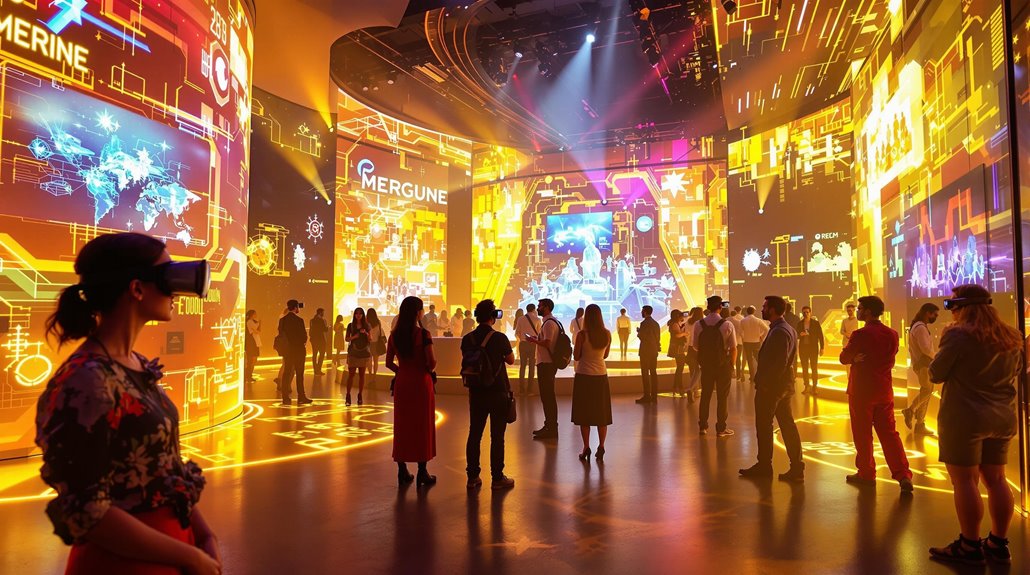
Imagine stepping into an event where virtual and augmented reality (VR/AR) seamlessly blend the physical and digital worlds, creating unparalleled immersive experiences.
In 2026, you’ll navigate virtual environments where boundaries blur, allowing you to engage with content like never before. Augmented interactions transform your surroundings, overlaying digital information onto the real world to enhance understanding and engagement.
Harnessing cutting-edge technology, these VR/AR systems offer precision in motion tracking and lifelike graphics, providing a sensory-rich experience.
You won’t just be a passive observer; you’ll actively participate, influencing outcomes and interacting with other attendees in real-time.
This convergence of virtual environments and augmented interactions not only redefines event experiences but sets a new standard for immersive engagement.
Embrace the future of events today.
Ultra-High-Definition Live Streaming
In the future, ultra-high-definition live streaming isn’t just a luxury but an expectation, transforming how events are broadcasted and experienced globally.
You’re at the forefront of an era where 4K resolution is standard, offering breathtaking clarity that engages and impresses audiences.
The technical challenge lies in achieving bandwidth optimization, ensuring seamless delivery without compromising quality. This requires cutting-edge compression algorithms and adaptive streaming technologies to efficiently manage data flow.
You’ll need to evaluate infrastructure upgrades, investing in advanced network solutions that can handle the increased data demand.
The future of event broadcasting is interactive, with real-time analytics and viewer engagement tools enhancing the experience.
Advanced Projection Mapping
Advanced projection mapping is revolutionizing the way events enthrall audiences by transforming any surface into a dynamic, interactive canvas. You can now turn mundane environments into enchanting experiences through precise image alignment and sophisticated software.
It allows you to create dynamic visuals that blend seamlessly with physical spaces, enhancing the storytelling potential of your event. Imagine a world where the walls around you pulse with life, responding to audience engagement and creating an immersive atmosphere.
This technology empowers you to craft interactive storytelling experiences, where every visual element can be manipulated in real-time to suit the narrative flow.
As an innovator, you’ll appreciate how projection mapping isn’t just about aesthetics; it’s about redefining interaction, enabling you to engage your audience like never before.
Real-Time Data Analytics and Feedback
While traditional event metrics often lag, real-time data analytics and feedback are reshaping how you measure and enhance audience engagement.
Imagine a future where you can tweak event dynamics on-the-fly using advanced data visualization tools. You’re not just gathering data; you’re transforming it into actionable insights.
Here’s what you can explore:
- Live Heat Maps: Visualize audience movement and interaction hotspots to optimize space utilization.
- Sentiment Analysis: Use AI-driven tools to gauge audience reactions through social media and instant feedback.
- Dynamic Engagement Metrics: Track real-time participation rates in various sessions and adjust content delivery accordingly.
- Instant Polling and Q&A: Foster interaction by addressing audience queries and preferences on the spot.
Embrace these technologies to elevate your event’s impact and guarantee a fascinating experience.
Enhanced Audio Experiences With Spatial Sound
As events continue to evolve, incorporating spatial sound technology can transform your audio experience by creating immersive and multidimensional soundscapes.
Imagine harnessing 3D audio technology to envelop your audience in a cocoon of sound, where every note and effect feels tangible and alive. Surround sound innovations allow you to manipulate auditory elements with precision, crafting a dynamic environment that captivates and engages.
Envelop your audience in a cocoon of sound, crafting dynamic environments that captivate and engage.
By employing advanced soundscaping techniques, you can tailor the audio atmosphere to enhance the emotional impact of your event. Additionally, integrating audio branding strategies guarantees your sonic identity resonates well beyond the event itself.
Embrace these cutting-edge tools to redefine how sound is perceived, leaving a lasting impression on attendees who crave novel, high-tech experiences. For events in Regina, consider pro audio, video, and lighting offerings to ensure your event’s sound and visual elements are professionally supported, enhancing overall attendee satisfaction.
Common Questions
What Are the Cost Implications of Adopting New Audiovisual Technologies?
You must evaluate budget considerations carefully when adopting new audiovisual technologies. Initial technology investment may be high, but innovative solutions can offer long-term savings and enhanced experiences, making them worthwhile for forward-thinking event planners seeking cutting-edge solutions.
How Can Event Planners Ensure Accessibility With Emerging AV Technologies?
Did you know 15% of the world’s population has a disability? To guarantee accessibility, integrate inclusive design and adaptive equipment. These innovations create an immersive experience, empowering all attendees to engage fully and enjoy your event’s vision.
What Are the Environmental Impacts of Advanced AV Equipment?
You should consider the environmental impacts of advanced AV equipment by adopting sustainability practices. Focus on reducing energy consumption, utilizing eco-friendly materials, and optimizing equipment efficiency to support innovative, green event solutions for a sustainable future.
How Do Current Infrastructure and Venues Need to Adapt for Future AV Trends?
When you hit the ground running with future AV trends, venue flexibility and infrastructure scalability are essential. You need adaptable spaces and tech-ready facilities to seamlessly integrate cutting-edge technologies, ensuring your venue stays ahead in the innovation game.
What Training Is Required for Event Staff to Operate New AV Technologies?
You need to engage in hands-on workshops and pursue certification programs to master new AV technologies. Embrace continuous learning to stay ahead, ensuring your skills evolve alongside technological advancements and meet the demands of innovative event environments.
Summary
Imagine you’re an artist painting a digital masterpiece, where each brushstroke adapts to the viewer’s gaze, revealing worlds within worlds. In 2026, you’ll harness the power of holograms and AI personalization, painting vibrant realities that blur physical and digital lines. Ultra-HD streams and spatial sound will be your palette, while projection mapping animates your canvas. Real-time analytics will guide your hand, ensuring each stroke resonates. Embrace this future, where technology and creativity dance in harmony.