
Blog

The Evolution of DJ Services: From Vinyl to Digital

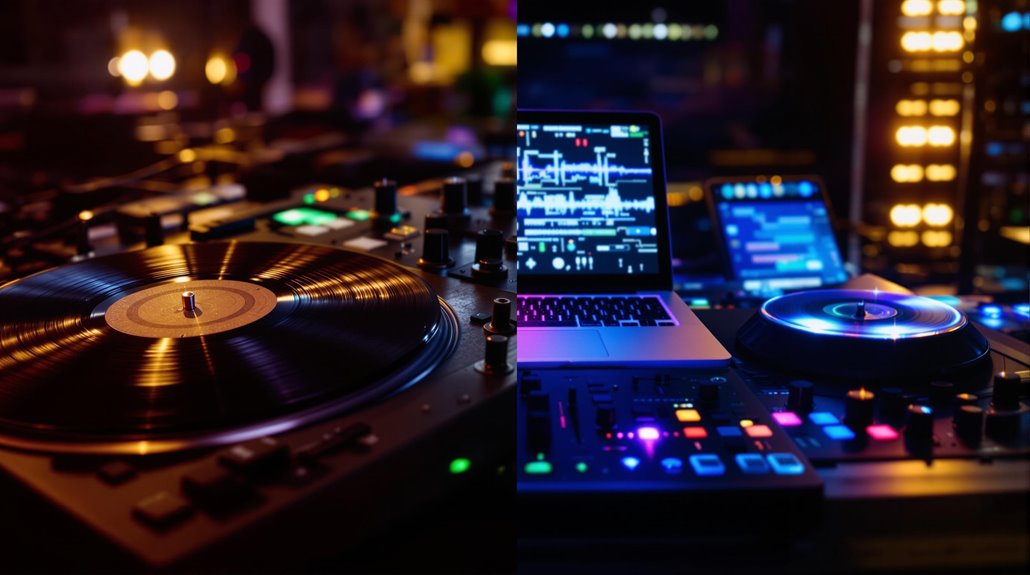
Imagine you’re a DJ in the 1980s, expertly spinning vinyl records at a crowded club. The tactile experience of handling records and the rich, authentic sound are integral to your craft. Fast forward to today, where digital technology offers vast music libraries and real-time manipulation tools. This evolution not only changed how you curate and perform music but also transformed the entire DJ industry. But what does the future hold for DJs?
TL;DR – (Too Long; Didn’t Read)
- Vinyl records introduced analog warmth and tactile connection, becoming crucial in DJ culture and fostering innovative sound manipulation techniques.
- CDs revolutionized DJing with precision and portability, allowing for expanded music libraries and modernized equipment aesthetics.
- Digital revolutionized DJ practices with vast music libraries, real-time analysis tools, and enhanced performance dynamics through software integration.
- Modern technology enables unprecedented control and flexibility in live performances through advanced looping and track manipulation techniques.
- AI and virtual events are transforming DJ roles, enabling global audience reach and interactive, personalized music experiences.
The Rise of Vinyl: A Brief History
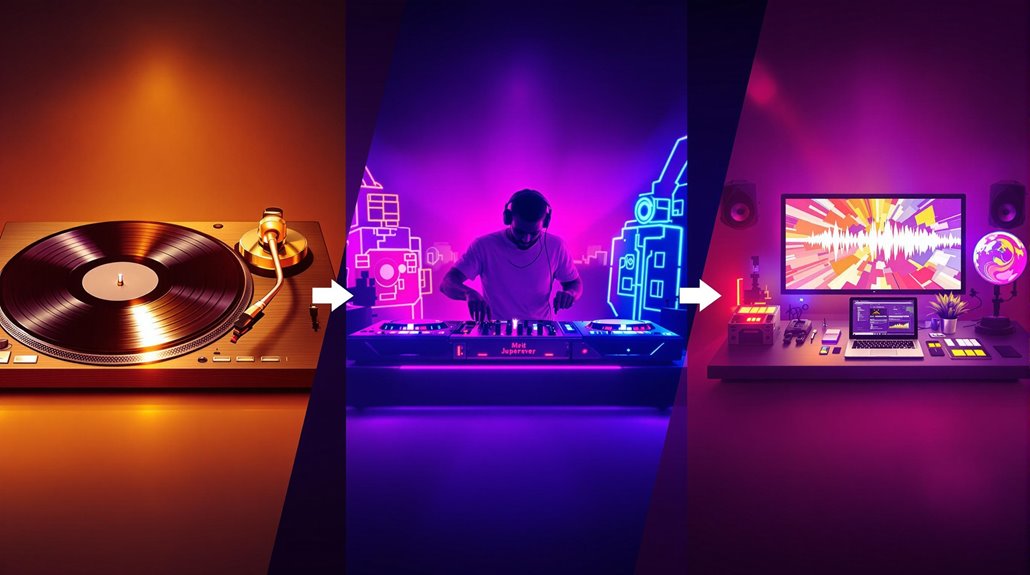
Though digital music dominates today, understanding the rise of vinyl provides essential context for the evolution of DJ services.
Vinyl records emerged in the mid-20th century, transforming music consumption with their unique analog warmth. This format quickly became the backbone of DJ culture, offering a tactile connection to music that digital formats lack.
You’ll find that DJs embraced vinyl’s physicality, using turntables to manipulate sound in innovative ways. Despite the digital takeover, a vinyl resurgence has occurred, driven by audiophiles and DJs valuing its authentic sound.
This revival emphasizes the timeless appeal of analog warmth, making vinyl a symbol of musical craftsmanship. As you explore the DJ landscape, consider how vinyl continues to inspire creativity and shape the future of music innovation.
The Transition to CDs and the Impact on DJ Culture

As the music industry evolved, so did the tools of the DJ, leading to a significant shift from vinyl to CDs, which brought profound changes to DJ culture.
You found yourself embracing the era of CD mixing, which offered a new level of precision and ease. Gone were the days of lugging heavy crates of vinyl; CDs offered portability and expanded your music library exponentially.
This change also transformed DJ aesthetics, with sleek CD players replacing turntables, signaling a modern, tech-savvy image. The tactile connection to music altered, yet the innovation sparked creativity, allowing for seamless shifts and unique soundscapes.
You became a pioneer, adapting to this change, steering the balance between tradition and technology, ultimately redefining the DJ’s role in music evolution.
Additionally, the state-of-the-art sound equipment available to DJs further enhanced their ability to deliver high-quality audio experiences, ensuring that the transition to digital formats did not compromise sound quality.
The Digital Revolution: Software and Controllers

While the change to CDs marked a significant evolution in DJ culture, the digital revolution has completely redefined the landscape.
You’re no longer confined to physical media. Instead, digital interfaces and software integration have become pivotal. This transformation allows you to manipulate your sound with unprecedented precision and creativity.
Here’s how this digital wave has changed the game:
- Digital interfaces allow seamless interaction between hardware and software.
- Software integration provides vast libraries at your fingertips, expanding musical possibilities.
- Controllers offer tactile feedback, enhancing your performance dynamics.
- Real-time analysis tools give you deeper insights into track structures and crowd reactions.
- Cloud storage guarantees you can access your music library anywhere, anytime.
These advancements have empowered you to push the boundaries of DJing further than ever before. With the advent of advanced lighting technology, DJs can now enhance the event ambiance, further elevating the energy and experience of their performances.
The Role of Technology in Shaping Modern DJ Techniques
Building on the digital revolution’s foundation, technology’s role in shaping modern DJ techniques is nothing short of transformative. You’ve seen how looping techniques have evolved, offering unprecedented control during live performances. With just a touch, you can manipulate tracks, creating seamless changes and dynamic soundscapes that captivate audiences. Technology empowers you to experiment, pushing creative boundaries by integrating layers of sounds effortlessly. In live performances, you’re not merely playing tracks; you’re crafting immersive experiences. Modern DJ software allows real-time track manipulation, giving you the flexibility to adapt to the crowd’s energy. The precision with which you can now loop and remix tracks wasn’t conceivable in the analog era. Embrace this digital prowess, and redefine what’s possible in DJ artistry. Hiring an experienced DJ ensures a professional and dynamic atmosphere, as they possess the expertise to seamlessly integrate this technology into unforgettable performances.
How Digital Platforms Have Expanded Access to Music
Though the music landscape has shifted dramatically, digital platforms have undeniably expanded access to music for DJs and listeners alike. Streaming services have revolutionized music accessibility, giving you an unprecedented library at your fingertips.
No longer constrained by physical collections, you can explore countless genres and rare tracks instantly. Consider the benefits:
- Diverse Selections: Explore global music without geographical barriers.
- Instant Updates: Access new releases as soon as they drop.
- Cost-Effective: Stream millions of songs without buying individual albums.
- Collaborative Playlists: Share and discover music with fellow DJs and fans.
- Advanced Algorithms: Get personalized recommendations to keep your sets fresh.
This digital transformation empowers you to innovate, diversifying your sets and reaching broader audiences with ease.
The Future of DJing: Innovations and Trends
What does the future hold for DJing as technology continues to evolve? You’re standing at the forefront of a revolution.
AI integration is transforming how DJs select and mix tracks, allowing for seamless setlists that adapt in real-time to audience reactions. Virtual events are breaking geographical barriers, enabling you to reach global audiences without leaving your studio.
Imagine hosting interactive experiences where attendees can influence the playlist through live voting. Streaming services offer limitless libraries, ensuring you’ve always got the right track at your fingertips.
As these innovations converge, they redefine the role of a DJ from a mere music curator to an experience architect. Experienced DJs curate personalized playlists reflecting the couple’s style and preferences, ensuring a memorable event. Embrace these trends, and you’ll shape the future of musical entertainment.
Common Questions
How Did DJs Initially Adapt to Changing Music Formats?
You quickly embraced new formats by mastering turntable techniques and music experimentation. Your adaptability allowed you to innovate creatively, merging styles and sounds, turning challenges into opportunities for artistic growth. You thrived by pushing boundaries and exploring fresh possibilities.
What Were the Challenges Faced by DJs During Format Transitions?
You faced format struggles adapting to new music technologies. Equipment limitations tested your creativity and technical skills. Innovatively overcoming these challenges required constant learning and embracing new tools to seamlessly mix evolving formats while maintaining your unique sound.
How Did the Cost of Equipment Influence the DJ Industry?
Imagine DJs riding a rollercoaster of price fluctuations, holding onto their wallets tightly. Equipment accessibility dictated their survival, making innovation both a thrilling and intimidating journey in sound, where the cost of gear could make or break dreams.
What Role Did Radio Play in Popularizing DJ Culture?
You can’t overlook radio’s influence on DJ culture. Radio provided a platform for DJs to reach larger audiences, amplifying their cultural impact. It allowed innovative sounds to spread, fostering a global appreciation and transforming the music landscape.
How Have Audience Expectations Evolved With DJ Service Advancements?
Imagine a storyteller’s evolution. You expect DJs to weave seamless tales, enhancing audience engagement. With music accessibility skyrocketing, you demand personalized experiences, blending innovation with tradition, ensuring every beat aligns with your ever-evolving musical journey.
Summary
You’ve witnessed the DJ’s journey from the tactile groove of vinyl to the seamless flow of digital beats. Imagine this transformation as a bridge, connecting the nostalgic past with the innovative future. The heartbeat of DJ culture now pulses with AI-driven creativity and virtual landscapes, offering endless possibilities. As technology continues to evolve, you’re not just a DJ; you’re an architect of soundscapes, crafting unique musical experiences that resonate across global audiences in unprecedented ways.